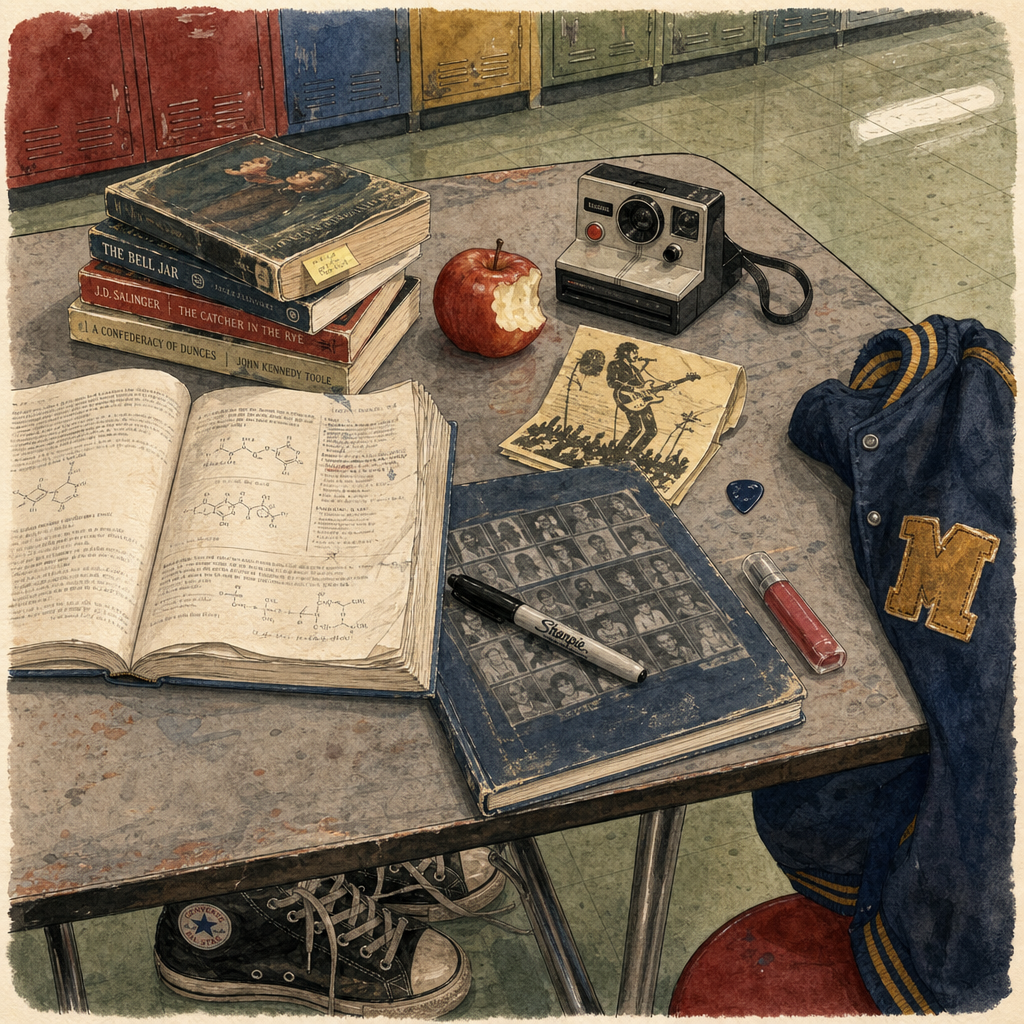
Which high school personality were you?
Eight teenage selves, eight ways of finding your people in a building full of strangers. Ten questions, one read on which one was actually running the show — and which one still is.
No sign-up needed · Share your archetype with friends

Saw something wrong and started a petition before they'd been told they were allowed to. Discovered early that doing the thing answers the anxiety about the thing.

Found a notebook, a guitar, a camera, a sketchpad — and decided that was where the real work was. Discovered young that there's a thing that's theirs.

Knew there was a wider world by twelve and started exploring it on paper. Two years emotionally older than their grade, which is its own loneliness.

Says the thing nobody is saying — in a voice that makes it survivable. Often the smartest person in the room; the comedy is the armor.

Earned belonging through the body. Learned discipline before they learned anything else. The team explained them to themselves.
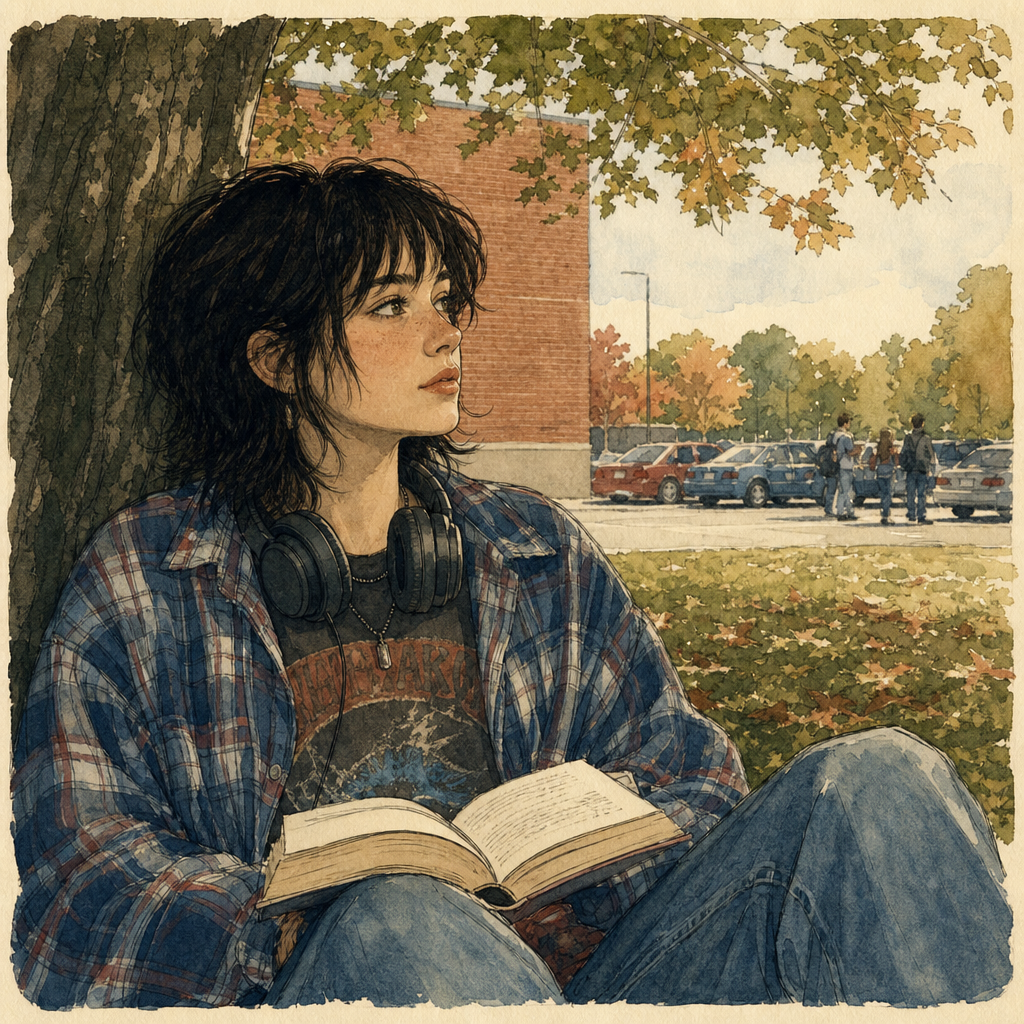
Not lonely, not unpopular — just unwilling to perform group-feeling on cue. Catches what the room is really doing because they're not invested in the room.

Tracks the social weather in a way others aren't even aware is happening. Often warm-hearted; the skill is making everyone feel seen.
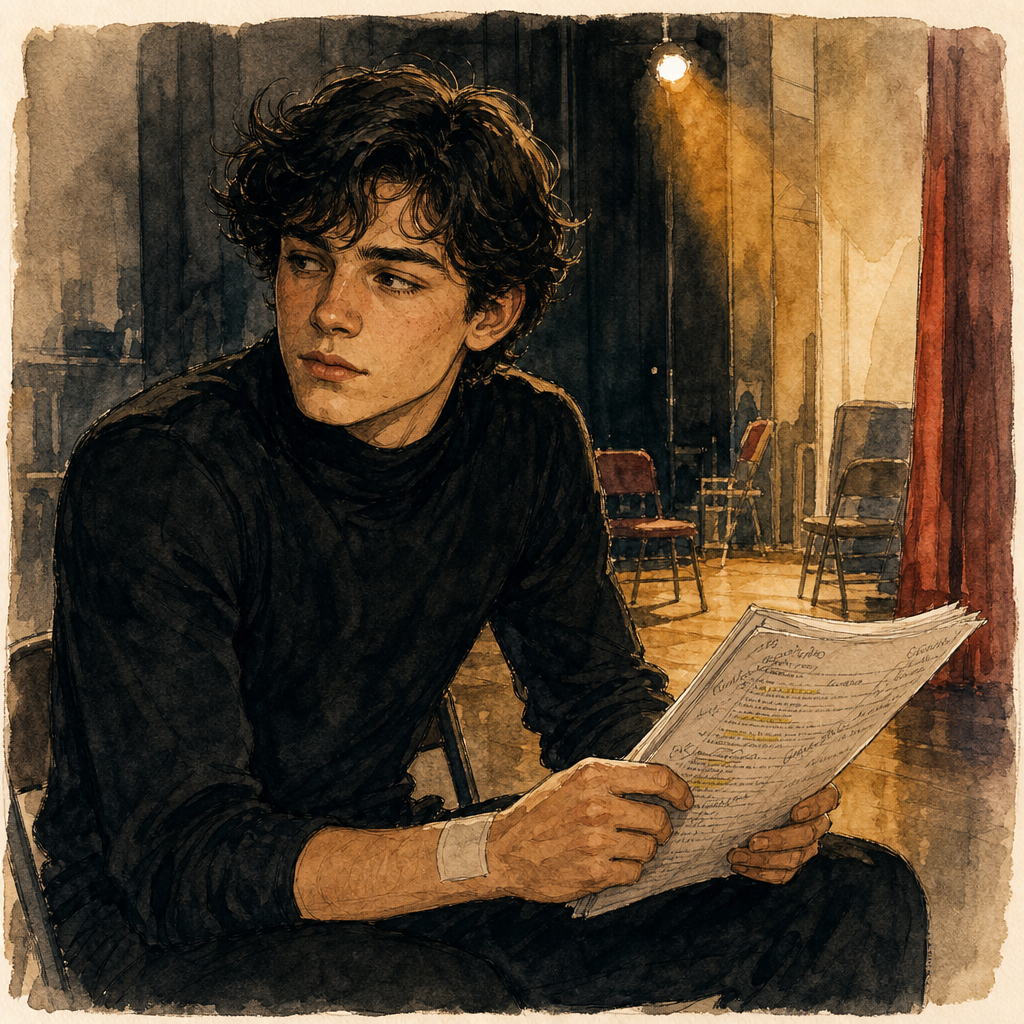
Loud about the things most people are quiet about. Found a stage and decided that's where the real talking happens.
The eight teenage selves most people met by sophomore year are personality archetypes wearing backpacks, and this high school personality quiz finds the one that was actually running your show in the hallway. Theatre Kid is the part of you that performs the truth. Jock is the part that earns belonging through the body. Class Clown is the part that names what nobody will. Bookworm is the part that reads ahead. Activist is the part that organizes before being told it's allowed. Loner is the part that watches. Popular Kid is the part that reads the room. Artist is the part that makes the thing instead of saying it. Most adults are a remix of two or three — but one usually led, and twenty years later it's still doing most of the steering.
What each archetype actually means
Most "what high school stereotype were you" quizzes treat the cafeteria map like a costume rack — letterman jacket, black eyeliner, debate-team blazer. That's the surface. Underneath, the eight archetypes are eight specific strategies for the same problem: how do you find your people in a building full of strangers who didn't pick you either?
- Theatre Kid — the truth-performer. Loud about the things most people are quiet about. Found a stage and decided that's where the real talking happens. Learned early that earnestness is a competitive advantage if you're willing to be slightly cringe in front of the people who aren't.
- Jock — the body-belonger. Earned a place by being useful in a physical room. Learned discipline before anything else; the team was the first organization that explained them to themselves, and the muscle memory of showing up early hasn't left.
- Class Clown — the truth-deflector. Says the thing nobody is saying, in a voice that makes it survivable. Often the smartest person in the room; the comedy is the armor. The ones who get past the armor are the ones who get the real person.
- Bookworm — the reader. Knew there was a wider world by twelve and started exploring it on paper. Two years emotionally older than their grade, which is its own loneliness — and the reason they're usually the friend people call at 2am about the actual problem.
- Activist — the organizer. Saw something wrong and started a petition before they'd been told they were allowed to. Discovered early that doing the thing is the answer to anxiety about the thing, and never quite got over the usefulness of that lesson.
- Loner — the watcher. Not lonely, not unpopular — just unwilling to perform group-feeling on cue. Catches what the room is really doing because they're not invested in the room thinking they're a part of it. Loyal to a small number of people, completely.
- Popular Kid — the room-reader. Tracks the social weather in a way other people aren't aware is happening. Not necessarily mean; often the warm-hearted one whose skill is making everyone feel seen, with the cost that they feel responsible for the temperature.
- Artist — the maker. Found a notebook, a guitar, a camera, a sketchpad — and decided that was where the real work happened. Didn't always finish things in high school; what they did was discover that there's a thing that's theirs, and the thing is still theirs.
How this quiz works
Ten questions. Each one drops you into a specific scene — a group project nobody wants, a Friday with no plan, a hallway moment that could go four ways — not a yearbook-superlative fantasy. Each of the four answers is something one of the eight would actually do. There are no generically correct choices. The trick is being honest about which one you'd really have picked at sixteen, before you learned to round yourself off.
Each answer is weighted toward one or two of the eight. Pick consistently for one and you'll land cleanly. Mix it up — most people do — and you'll get the one that won the most votes, with a hint at your second-strongest pull. The whole thing takes about two minutes. Save it, screenshot it, send it to the friend who knew you then and see if they agree.
Is the high school personality quiz accurate?
Accurate enough to be uncomfortable, if you answer honestly. The quiz isn't trying to guess your GPA or whether you actually wore a letterman jacket — it's reading the underlying social strategy you used to find your people. That strategy tends to be stable. The Class Clown at sixteen is usually still deflecting at thirty-six, just in meetings instead of homeroom. Where it gets wobbly is if you answer as the person you wish you'd been. Answer as the person who actually walked those hallways and the result lands.
How long does the quiz take?
Ten questions, about two minutes. Each question is a small specific scenario with four answers, and you can't really game it without noticing you're gaming it. Most people slow down around question six or seven, when they realize the quiz isn't asking what they liked but what they actually did. That's the useful part. If you're taking longer than three minutes, you're probably negotiating with a memory, which is also fine.
What if I was more than one of these?
Most people were. The Bookworm who played one sport. The Theatre Kid who organized the walkout. The Popular Kid who was secretly the Artist after school. The quiz is built for blends — it weights every answer toward one or two archetypes and gives you the one that won the most votes, plus a hint at your second-strongest pull. If your result feels half-right, the other half is usually the runner-up. That combination is often the more accurate read than either alone.
Can my high school archetype change?
The archetype itself usually doesn't. What changes is which one is in charge. People who were Loners at fifteen often become functional Popular Kids at thirty-five — same wiring, more skill. Class Clowns sometimes quiet down into Bookworms once the room stops requiring a defense. The eight patterns are stable; the way you wear them isn't. If you take the quiz once a year for a decade, the top result tends to hold steady while the runner-up drifts.
What if I get the one I didn't want?
Sit with it for a minute before retaking. The archetypes people resist tend to be the ones carrying the most useful information. Nobody wants Loner; Loners are the most observant people in any room. Nobody admits to Popular Kid; Popular Kids are doing real emotional labor most people couldn't sustain for a week. The result you didn't want is often the one your closest friend would have picked for you. Worth checking.
Why isn't "goth" or "stoner" on the list?
Because those are aesthetics, not archetypes. A goth could be a Bookworm, an Artist, a Loner, or a Theatre Kid wearing different makeup; a stoner could be any of the eight on a Friday. The quiz is built around the underlying social strategy, not the subculture wrapped around it. Eight is also the point where the archetypes stay distinct from each other. Add more and they start to blur into hair choices and band T-shirts, which isn't what we're measuring.
Does this work if I didn't go to American high school?
Mostly, yes. The labels are American-shaped — "Jock" and "Class Clown" and "Popular Kid" come out of US high-school movies — but the underlying patterns aren't. Every adolescent social environment has a body-belonger, a room-reader, a watcher, a maker, an organizer, a deflector, a reader, and a performer. The costumes change. The strategies don't. If the vocabulary feels foreign, translate it: the Jock might have been the rugby kid, the Theatre Kid might have been the choir lead, the answer still lands.
Do these archetypes still matter in adulthood?
More than people admit. The high school version of you was solving the problem of belonging without much skill or context, which means whatever strategy you landed on is the rawest version of how you still operate. Adult life dresses it up — the Activist becomes the difficult coworker who's usually right, the Popular Kid becomes the manager everyone says they'd follow anywhere, the Loner becomes the senior person whose opinion the room waits for. The pattern is the same. The stakes got higher.