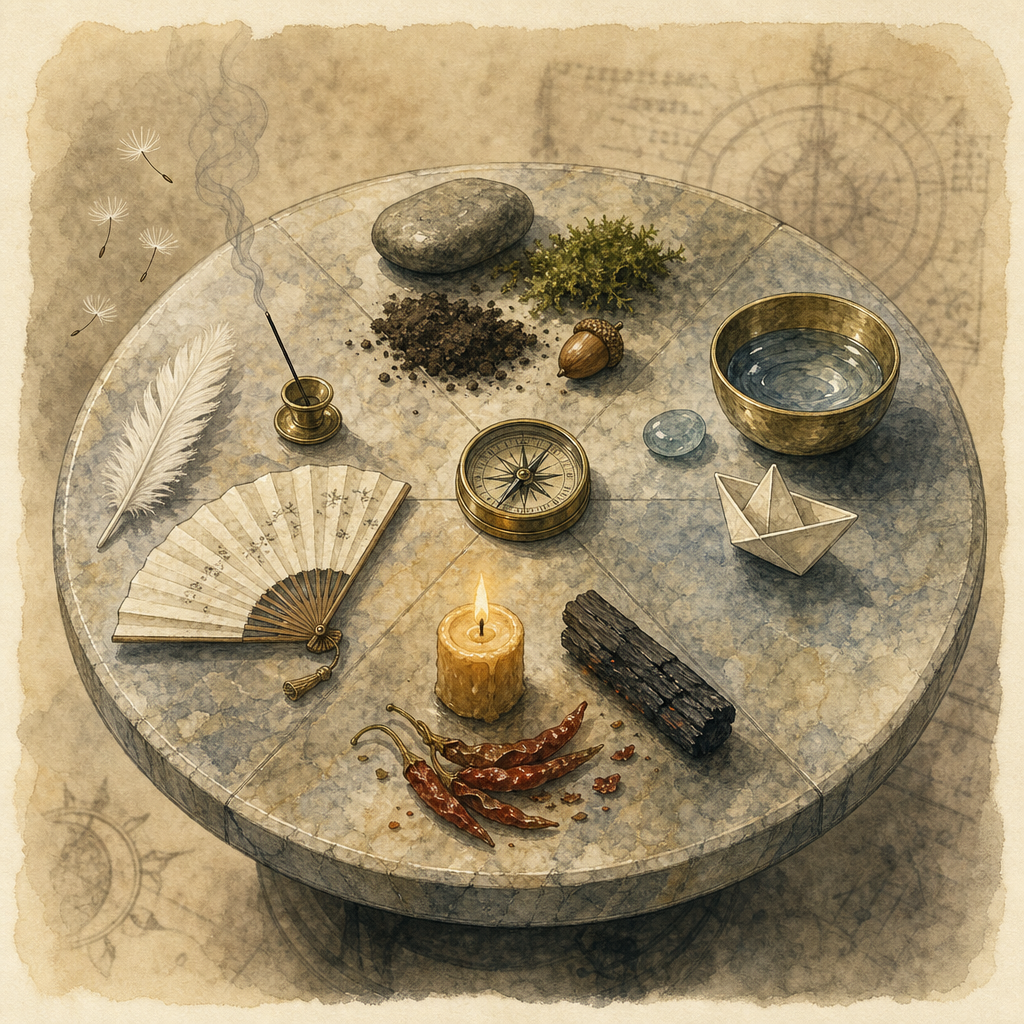
Which classical element are you?
Four elements, four ways of being in the world. Ten questions, one read on which one is actually running your nervous system — and what that means about the room you're in right now.
No sign-up needed · Share your archetype with friends

The connecting one. Ideas, language, abstraction. Sees the pattern across the room before anyone has named the individual pieces.

The holding one. Steady, patient, slow to spend energy. The foundation everyone else builds on without realizing.

The kindler. Energy, will, sudden decisions. Lights the room and starts the conversation. Consumes the very fuel they keep things alive with.
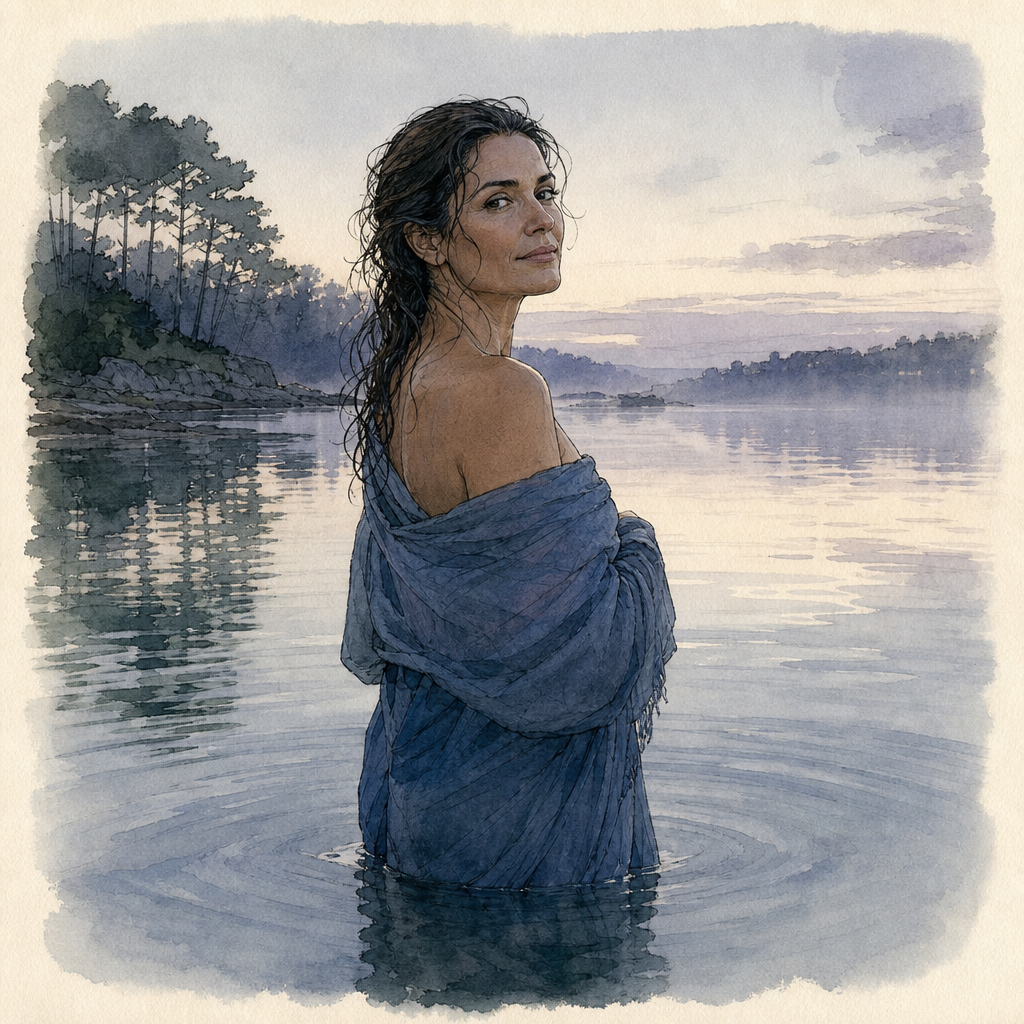
The flowing one. Adapts to the container, dissolves boundaries, holds emotional weather. Knows what others are feeling before they do.
The four classical elements are the oldest personality quiz on record, and they hold up. Fire is the part of you that ignites. Water is the part that flows with what is. Earth is the part that holds and remembers. Air is the part that connects ideas across the room. Most people carry one as primary and one as secondary, and spend a lifetime learning to summon the other two on demand. This quiz finds the one that's actually running your nervous system when the stakes go up.
What each element actually means
Most "which element are you" quizzes treat the four like aesthetics: pick your favorite season, get the element whose mood board matches. That's not the real test. Fire, water, earth, and air map onto four specific temperamental orientations — four different ways of metabolizing a hard afternoon. The pre-Socratics weren't doing astrology. They were noticing that people show up to a room in four recognizably different ways, and naming the pattern.
- Fire — the kindler. The one who lights the room and starts the conversation nobody else was willing to start. Fire-types make sudden decisions and live with them. They're warm in a way you can feel from across a table, and they burn the very fuel they keep things alive with — which is why they need real rest, not the kind they pretend to take.
- Water — the flowing one. Adapts to the container, dissolves the edges between people, holds the emotional weather of a room without being asked. Water-types know what you're feeling before you do, and they're rarely wrong about it. The cost is that other people's moods become their own if they don't learn where their skin actually ends.
- Earth — the holding one. Steady, patient, slow to spend energy on things that don't deserve it. Earth-types are the foundation everyone else builds on without realizing the foundation is a person. They're the friend who shows up at the airport at 5am without complaint, and the one whose absence, when it finally comes, reorganizes the group.
- Air — the connecting one. Ideas, language, the pattern across the room before anyone has named the individual pieces. Air-types are the ones who say the thing that makes the conversation suddenly make sense — and who sometimes float a half-inch above the actual situation because the abstraction is more interesting than the specifics.
How this quiz works
Ten questions. Each one drops you into a small, specific scenario — a difficult Tuesday, not a mythological trial. Each of the four answers is something one of the elements would actually do, said in the voice of someone living that temperament. There are no generically correct choices, and no answer that wins points for sounding wise. The trick is being honest about which one you'd really pick when no one's grading you.
Each answer is weighted toward one or two of the elements. Pick consistently and you'll land cleanly. Mix it up — most people do — and you'll get the element that won the most votes, with a hint at your second-strongest pull. The whole thing takes about two minutes. Save the result, screenshot it, retake it in a season and see whether the room you're in has changed which one is running you.
Is the classical element quiz accurate?
As accurate as a ten-question read can be — which is more accurate than the format suggests, because the four elements are unusually clean dimensions. Most serious personality systems collapse to four or five axes once you strip the marketing, and fire/water/earth/air map onto those axes well. The quiz isn't measuring a fixed soul-trait. It's measuring which orientation is running you right now, in the season of life you're in. If the result feels exactly right and slightly uncomfortable, that's usually the signal it landed.
Can my element change over time?
Yes, and it should. Most people have one element they were born running and another they grew into. A fire teenager often becomes an earth thirty-something once life has asked them to hold things for other people. A water in grief often shows up as air for a year, living in ideas because the feelings are too much. The dominant element is less a fixed identity than a current setting — useful to know, worth checking on, not worth tattooing.
What if I get the element I didn't want?
Pay attention to that. The element you wanted is usually the one you're trying to perform, and the one you got is usually the one actually doing the work. Earth-types often want to be fire. Air-types often want to be water. The wanting is information about what you think is valuable; the result is information about what you actually are. Sit with the gap for a day before you retake it. The gap is the interesting part.
How long does the quiz take?
About two minutes if you answer instinctively, closer to four if you're the kind of person who reads each option twice. Ten questions, four answers each, no trick questions. We've found that the people who overthink it get the same result as the people who don't — the signal is strong enough to come through either way. If you find yourself stuck between two answers, pick the one you'd do, not the one you'd admire someone else for doing.
Why only four elements and not five?
Some traditions include a fifth — aether, void, spirit, wood, depending on the system. We stuck with the Greek four because they map cleanly onto temperamental orientations that show up in modern personality research, and adding a fifth tends to muddy more than it clarifies. Four is enough to say something true without pretending to more precision than the signal supports. If you feel like none of the four fit, you're probably a strong blend of two — which the result page will tell you.
What's the difference between the classical elements and the four humors?
They're related but not identical. The four humors (sanguine, choleric, melancholic, phlegmatic) were Hippocrates and Galen's medical theory, mapping bodily fluids to temperaments. The four classical elements are older, pre-Socratic, and more cosmological than medical — Empedocles proposed them as the roots of everything. Later thinkers linked the two systems: fire to choleric, air to sanguine, earth to melancholic, water to phlegmatic. This quiz uses the elemental frame because it's cleaner and less tied to ancient anatomy.
Can I be two elements at once?
Most people are. The framework assumes one dominant element and one secondary, and the interesting personalities tend to be the blends — fire-air, earth-water, the combinations that pull in two directions. The result page names your primary and gives a read on your second-strongest pull. If your top two are nearly tied, the quiz will say so. Pure single-element results are rarer than you'd think, and usually happen at extreme moments in someone's life rather than across the whole of it.
Is this based on astrology?
No. Astrology assigns elements based on birth date; this quiz assigns them based on how you actually answered ten questions about how you behave. The overlap with astrological elements is coincidental — a fire sign who answers like an earth will get earth here, and that's the point. The classical four predate astrology by centuries and were originally a theory of matter and temperament, not a horoscope system. We're using the older, less mystical version of the frame.